
How can I help?
A unique approach bespoke to your unique needs.
I never use PowerPoint presentations. I don’t run standardized workshops or training modules. Nor give off-the-shelf formulaic talks that others have heard before. Everything I do is bespoke to your needs. What challenges are you facing right now? What is your deepest need? What’s on your mind?
This will be the starting point for our discussion. And a variety of approaches and possibilities will emerge from this discussion. It could be one-on-one guidance over a period of time, or the organizing of several group ‘thinking and doing’ sessions exploring unique ideas, or simply me sharing inspiring, action-oriented ideas in front of a large group of individuals in your organization.
Over the years all types of individuals and organizations have seen their thought moved to the next level, enabling the right action through this bespoke approach: CEOs of small or large multinational companies, members of government, heads of charities, academia and countless individuals from all walks of life, from a migrant worker in China, to a corporate CEO in Europe, a professor in North America, or a member of the board of a sovereign wealth fund in Africa.
And it always starts with a discussion. So let’s talk!
How to deal with China and the emerging world
China is not our enemy. So much of what is offered in the speaking and consulting world about China and the ‘new world’ is invariably a singular, white, male-dominated way of looking at geopolitics, reductive, extractive and failing on a massive scale to address the needs and interests of all parties in more sophisticated ways.
China and other emerging powers forces us to hold a mirror up to Western values, inviting us not to wallow in our own arrogance about what we believe to be ‘right’ and enter a fresher way of looking at the world, based on principle not politics. It offers us an expanded view of the world in its richness and wealth of opportunity.
Working with Western multinationals to bring teams together from across the world and how to develop products and services that harness the best of heritage and tradition with new innovative product design catered to global markets, helps the company become truly ‘glocal’ in its marriage of the local and the global.
Migration and Movement of Thought
We need to go further in understanding and acknowledging the huge benefits that migration offers to our communities, not just economically, but socially, culturally and politically. We waste a huge resource of knowledge and understanding about other countries that could inform decision making about global security and economic growth. Migrants, ‘expats’ and others who live on the ‘edge’ of our communities, hold a mirror up to our own selves, reflecting back to us our own values and showing us who we are. They push us to think deeper and more substantially about what needs to shift in progressive ways.
Since building the social enterprise Hua Dan in China, we have created a global model for the training and empowerment of migrant, refugee and displaced women, to be entrepreneurial leaders in their own communities, as agents of change not victims. Similar work in Afghanistan, Syria, Iran and Palestine, UK and Europe, has proven the resourcefulness, resilience and creativity of migrant populations and their significance to world peace and prosperous societies. We need a larger conversation about the ‘movement of thought’ that those who have travelled across borders can bring to our world than a false narrative from sentimental, limited and nationalist thinking.
World Peace and Security
We urgently need a deeper and more substantive understanding of what is needed for world peace. A more rooted and grounded empathy with the perspectives of others, the values that shape their world view, and with the vision to see that we are ‘all in this together’ and thus need to find solutions that transcend national boundaries towards an elevated understanding of what unites us all in the one humanity.
Those with a more expansive world view, with lived experience of what it means to cross the borders of their mind, not just individual interests and nationalistic thinking; those with the humility, courage and compassion to reorient their own world view towards those of others, and the ability to speak multiple languages, both literally and figuratively, must lead us all onwards towards new visions and actions for global peace and security for us all.

The Role of Europe
At a time of deepening insecurity and global conflict, Europe can and must be an authentic and trustworthy defender of human rights and the rule of law. Uniquely positioned between the United States and China, with the capacity to unite the ‘middle powers’, what it fears it lacks in size and strength, it can easily make up for in diversity and agility.
The idea of Europe must go beyond just what the European Union itself is capable of and renew it’s systems and people’s vision through a re-engagement with the ‘higher order’ values that unite the diversity of its people.
It will require those with a deep understanding of both the challenges and opportunities of the current world order to understand Europe’s role within the larger context of global peace and security in order to help her people play their vital role in defending freedom and democracy for all.

Revolutionising Global Governance, Transforming Systems
The challenge humanity faces right now are existential in a way they have never been before. Not only do our systems need an overhaul, but they need a fundamental re-examination of the values that underpinned them in order for us to create something anew. We cannot simply bandage up what has clearly been broken, still less to ignore the shifting sands and new waves of leadership that are emerging in our world.
Any organisation needs more participatory, people-lead, empowering, non-hierarchical, trust-based systems, based on principle not politics. These are the true frameworks to enable human and organisational flourishing. This is as true for a large corporation, a government, a local charity, or even a family unit.
We need more than AI
We are now in a race to the bottom of denigrating humanity’s potential in subservience to the machine. Greater moral imagination within human themselves is what we most need: The ability to combine truly innovative thinking with moral fibre, compassion, depth of thought and courageous action, something that AI cannot give us.
‘Chinese people cannot be creative’ I was told. But when you lead in a way that sees the full potential of the individual, drawing out their hidden strengths through a shared vision of what is possible, extraordinary things are possible. Like empowering 32,000 migrant women and children, factory workers being treated like robots, long before robots were even invented. Robot-like thinking happens everywhere – with AI, yes; in authoritarian states, for sure; in the prosperous and democratic West? 100%! No one is immune to robot-thinking, but with the right leadership and tools to empower potential, we can all reconnect with what makes humans unique.

More than ‘innovation’, we need breakthrough thinking.
The failure to ask the truly deeper questions about what problems we are actually solving FOR can actually end up stifling or limiting the creativity that is needed to break through and address the much larger problems that we are facing.
Is this product solving a problem that actually exists? Is this product purely for financial gain? Is this government strategy really meeting the people’s need? The success of any product or strategy that stands the test of time is in its beauty, artistry and the interplay between innovation and tradition. Working for a Middle East government, the opportunity to preserve the best of heritage and legacy, with substantive and advanced thinking, led to a breakthrough innovation to pioneer a whole new industry for the country.
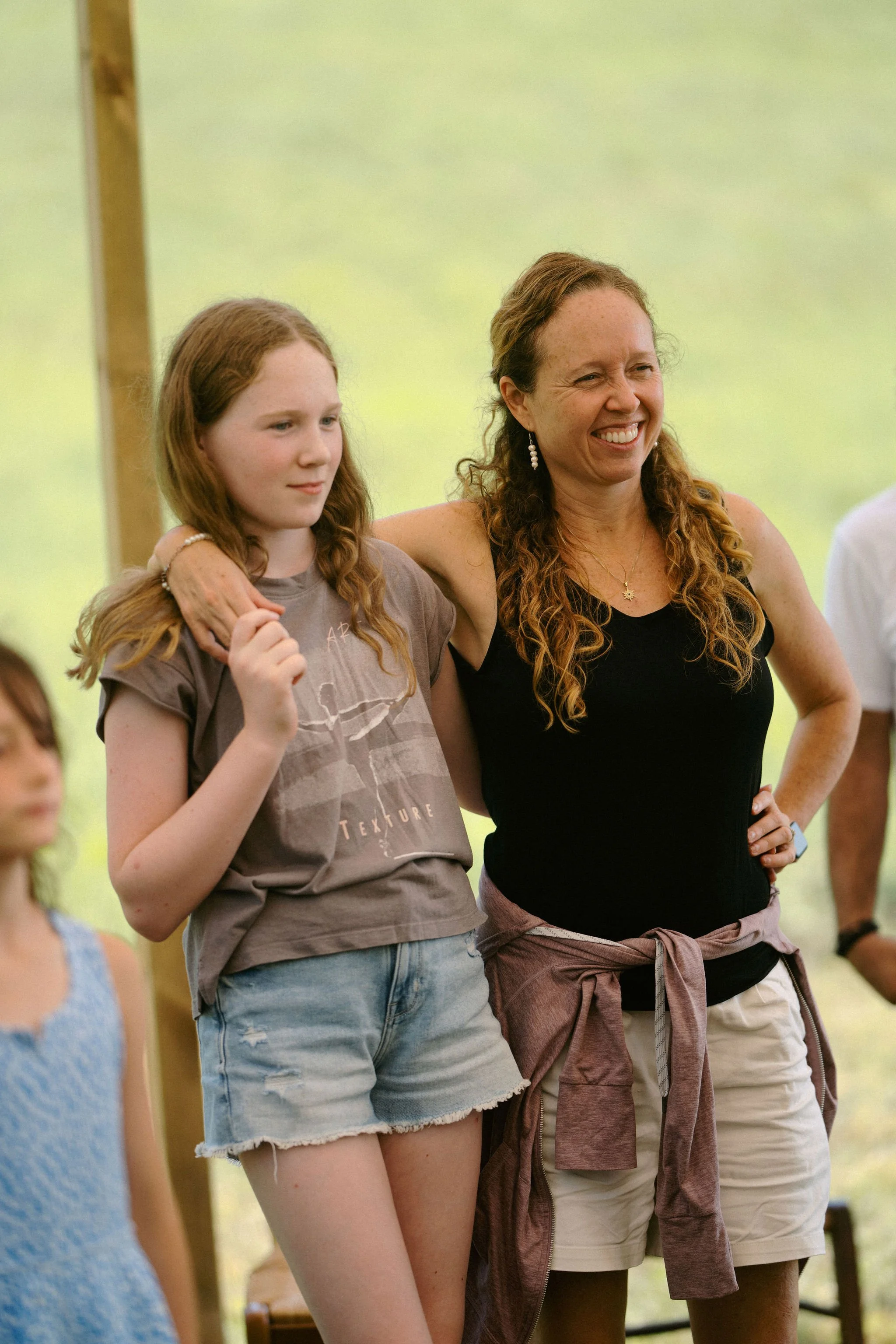
Our education and learning systems are not fit for purpose
No longer is the acquisition of facts necessary. Nor are siloed subjects unhinged from the practical realities of everyday life of any value. Each one of us needs to double down on our individual capacity for human agency, develop the resilience to deal with threats to our physical and mental health, learn to work with others with greater empathy, understanding and collaboration, have the ability to extend one’s mental models to the lives and realities of others for more compassionate leadership.
At Clos de Gaye, we are developing a global model for education and learning that goes beyond the classroom. Already, after just a few sessions, we are seeing greater personal agency, the capacity for collaboration and imaginative thinking that will be the hallmarks of successful personal and professional leadership for our participants.
How women can step up to leadership
Women can no longer wait until they are given permission to lead. The challenges our world is facing demands a more feminine standard of leadership and women are being called upon to lead that charge.
Women are needed in the boardroom, in the corridors of power and at the peace table. But in order for them to lead in these places, they need the courage, confidence and moral clarity that a more feminine view of the world can bring, the reminder that their ability to deal with complexity sets them apart from men in being able to deal with the challenges we face, and permission from themselves, not from others, to demand the changes our world needs.
Empowering women to lead is at the heart of so much of my work, whether it’s through leading a small group of migrant women to impact the lives of thousands other women and children across the world, or coaching senior women executives and those in government positions, the power of female leadership is set to have an outsize impact in the world.
Spirituality and Leadership
We all know that leadership is in crisis. The leaders we see today are completely lacking in any moral fibre, corrupt to the core, putting our world into ever more precarious and dangerous situations. Whether it’s through the wilfull ignorance of climate change, the refusal or inability to sufficiently regulate against the dangers of AI, the stoking of both regional and global conflict, or a fundamental disconnect from the reality of most people’s ordinary lives, few would doubt that our leaders have humanity’s best interests at heart.
We tend to lump together the idea of spirituality and religion, forgetting that the former is about our natural and divine heritage, and the latter a purely human construct, structured and institutional. We need to move away from narrow definitions of what it means to live an interior life and to uncover the glorious gifts that we each one of us possess that brings us naturally inline with our divine heritage. To see in another human being that which connects us is to enter into a more profound journey not only with those we encounter but also with ourselves. We need leadership of the ‘highest order’ that sees the true potential of mankind and serves humanity with that singular goal of bringing out the very best in what we can of us offer.
The arts aren’t necessary in our world anymore, are they?
In an age of artificial intelligence, it might seem hard to make a case for the arts but this is precisely when they are most needed. As we experience a race to the bottom of what humanity is capable of, the arts elevate our thought and actions and bring us more in line with what it means to be human.
So much of what we are being told is that AI will even take over the creative professions. But that proves a fundamental misunderstanding of what creative practice is and isn’t. Artistic expression is never simply product based, in the way in which American enterprise has typically understood it. Rather, each artistic experience is uniquely shaped by the artist and audience relationship, it’s situation in time and space and, critically, it’s direct relationship to divine inspiration. It is never dependent on a sense of ‘brain’ or ‘intelligence’ but is based on something far more profound that artificial intelligence will never be able to access.
In that rush to deface humanity, the arts and cultural industries must understand their unique role in restoring humanity back to itself. They must double down on their creative expression, their integrity to people and place, and the power of living in the moment. They must understand their unique relationship to cultural identity, not as a barrier or wall that divides nation states from others, but for their beauty and promise and reflection back to each one of us about the heritage we all share.
As individuals, we must continue to engage in the arts not just as consumers but as producers. We all have artistic sensibilities and the capacity to extend our creative imagination well beyond what we thought was possible and we must urgently ensure our artistic identity is central to all other aspects of who we are. We must live integrated lives that embody movement, sound, feeling, intellect and soul into a more rounded expression of who we are as people. And we must support and encourage our children to do the same.
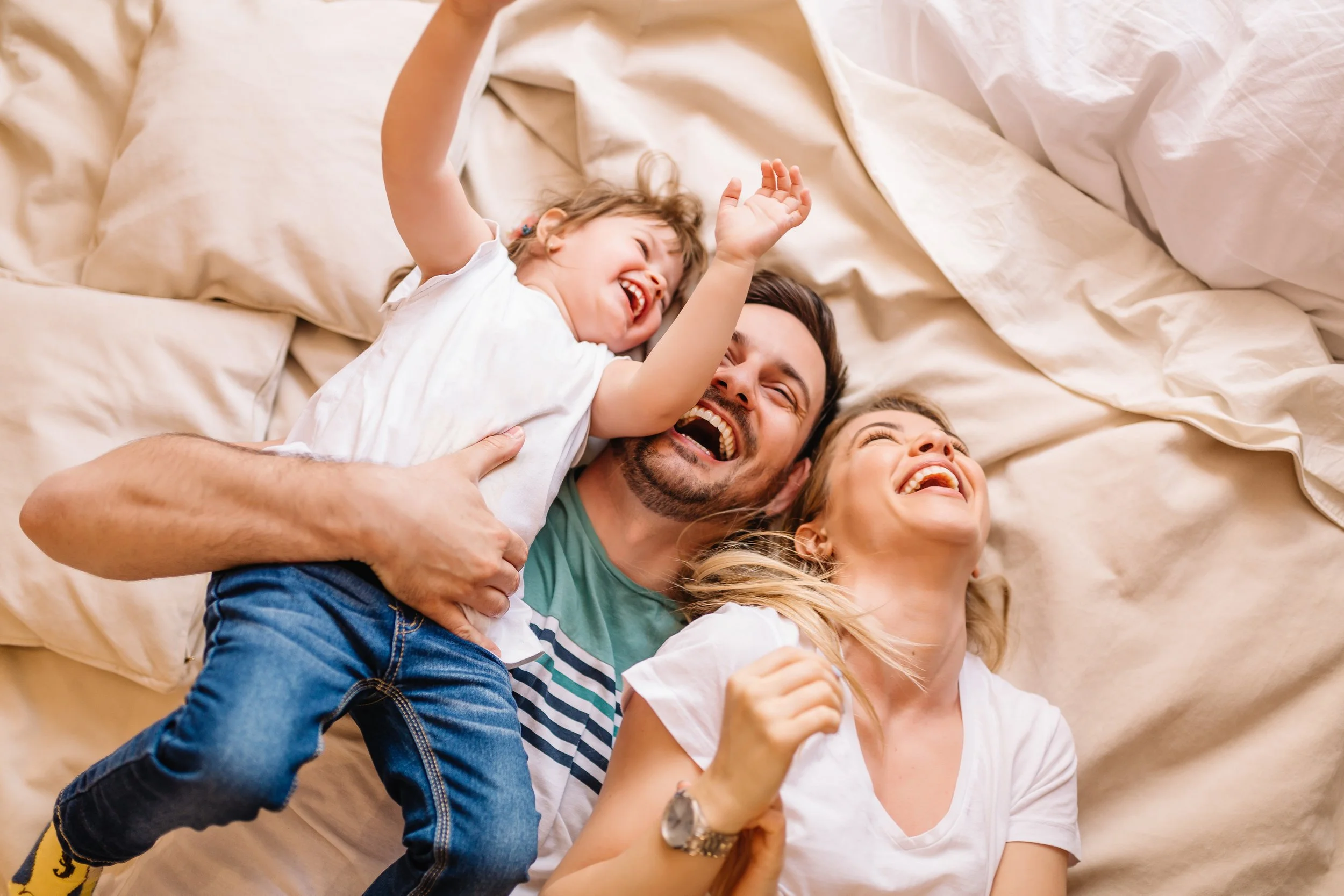
Love, Marriage and Parenting
So much of my journey has been an effort to ‘extend myself in love’ by any means possible. From an early age, I was certain that my life’s purpose was love and that underlying all of my endeavours, from the personal to the professional, involved a profound and transformative understanding of the power of love. Love not as an emotion, but as the true force for life – a state of being, as well as doing. That quest to understand love has been at the centre of my desire to understand and embrace the beauty and richness of our world and as the cement that holds together the highest ideals of what humanity is capable of.
It has been said that the most important decision a woman can make to further her purpose in life is to choose the right husband. No woman ‘needs’ a husband but the right life partner can be the ‘wind beneath your wings’, enabling you to achieve outsized impact through your solid belief in your value and capabilities. The opposite is true also and there are countless examples of incredible women who have been let down by the limited thinking and oppressive nature of their spouses and the wider attitudes to women so common in our societies.
Through talks and workshops and experiences at Clos de Gaye, I share my vision and experiences of a loving marriage and harmonious home life in the hope that more women may have the courage and confidence to build relationships that serve their own individual goals and vision for humanity.